Best Pooja Room Wallpaper: Spiritual & Indian Wall Decor Ideas
A pooja room isn't just another corner of the home—it's a space where you pause, pray, and reset your mind. That's why the background of your mandir matters. The right pooja room wallpaper can instantly make the area feel more sacred, organized, and visually calm—without major renovation. Whether you prefer traditional art, temple-inspired motifs, or minimal designs with spiritual symbols, wallpaper is one of the easiest ways to create a devotional atmosphere.
In this guide, you'll find practical ideas and styling tips for Indian wallpaper, pichwai wallpaper, spiritual wallpaper, and lotus wallpaper, along with advice on choosing the right wallpaper for wall placement in a modern Indian home.
Best Places to Use "Wallpaper in Wall" for a Mandir Setup
Placement is everything in a pooja room. A good design should support the spiritual focus—not distract from it. Here are the most effective ways to use wallpaper in wall layouts:
1) Back wall behind the mandir (most popular)
This creates a clean focal point and makes the altar feel framed—similar to a temple sanctum.
2) Full niche or alcove wrap
If your mandir is in a recessed niche, wallpapering the entire inner wall area creates a "shrine effect" and feels intentional.
3) Side panels for symmetry
If you prefer subtlety, keep the back wall plain and wallpaper only narrow side panels like a border.
4) Ceiling panel above the mandir (advanced look)
A soft lotus or starburst pattern overhead can create a dome-like, temple-inspired mood—best in small pooja corners.

Indian Wallpaper Styles That Suit Pooja Rooms
Indian wallpaper is a broad category—from folk art to royal motifs. For a mandir space, designs should feel grounded, warm, and spiritually aligned.
Indian motifs that work beautifully
- Temple arches and jaali patterns (adds heritage character)
- Traditional floral vines (soft, timeless, not overpowering)
- Madhubani or Warli-inspired patterns (folk art with cultural depth)
- Gold motifs on neutral backgrounds (luxury but calm)
- Sanskrit/Om patterns (use sparingly to avoid visual clutter)
A good rule: if the wallpaper is very detailed, keep the mandir décor minimal. If the wallpaper is minimal, you can add richer accessories like brass bells, carved frames, and layered diyas.
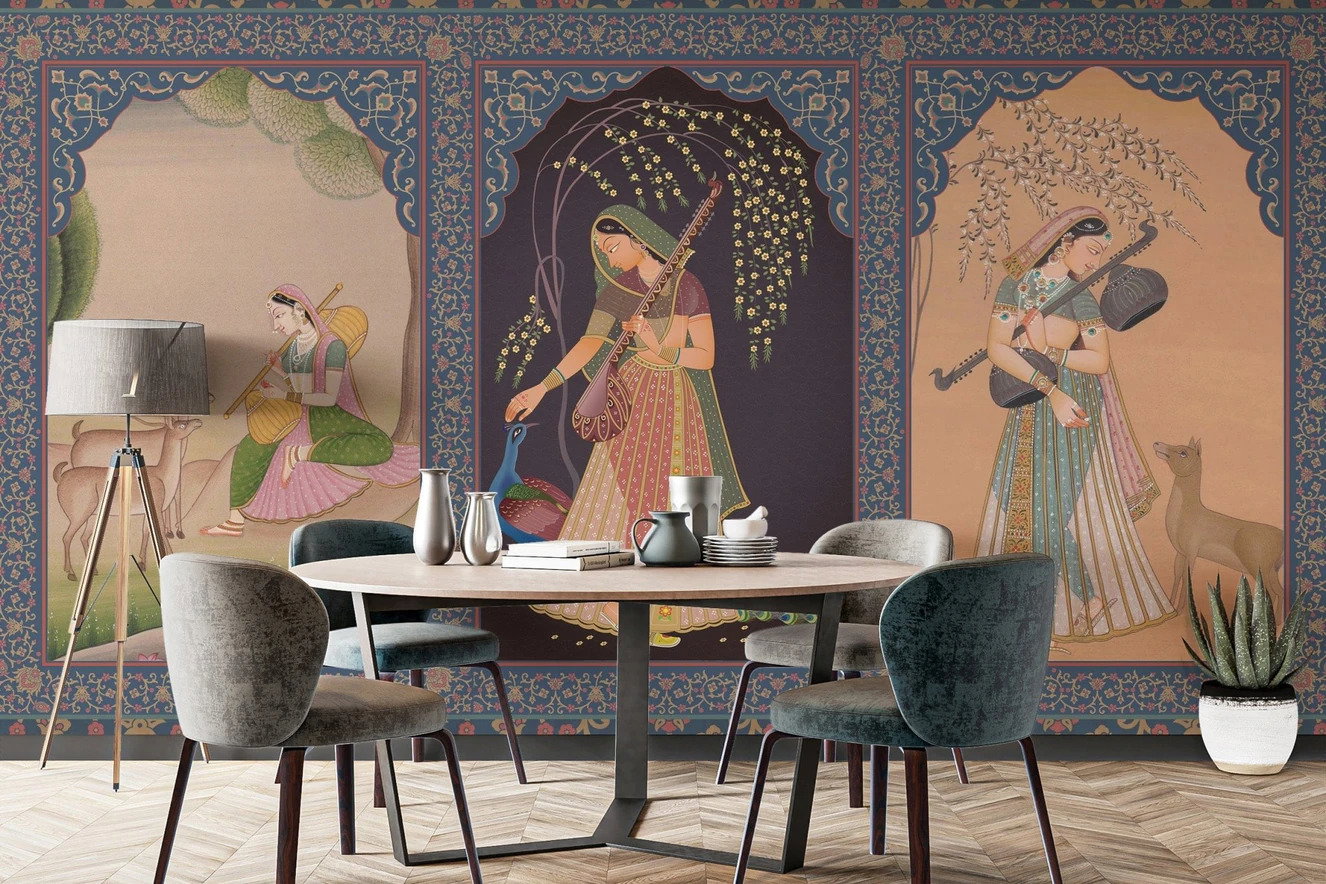
Pichwai Wallpaper: A Heritage Statement for the Mandir Wall
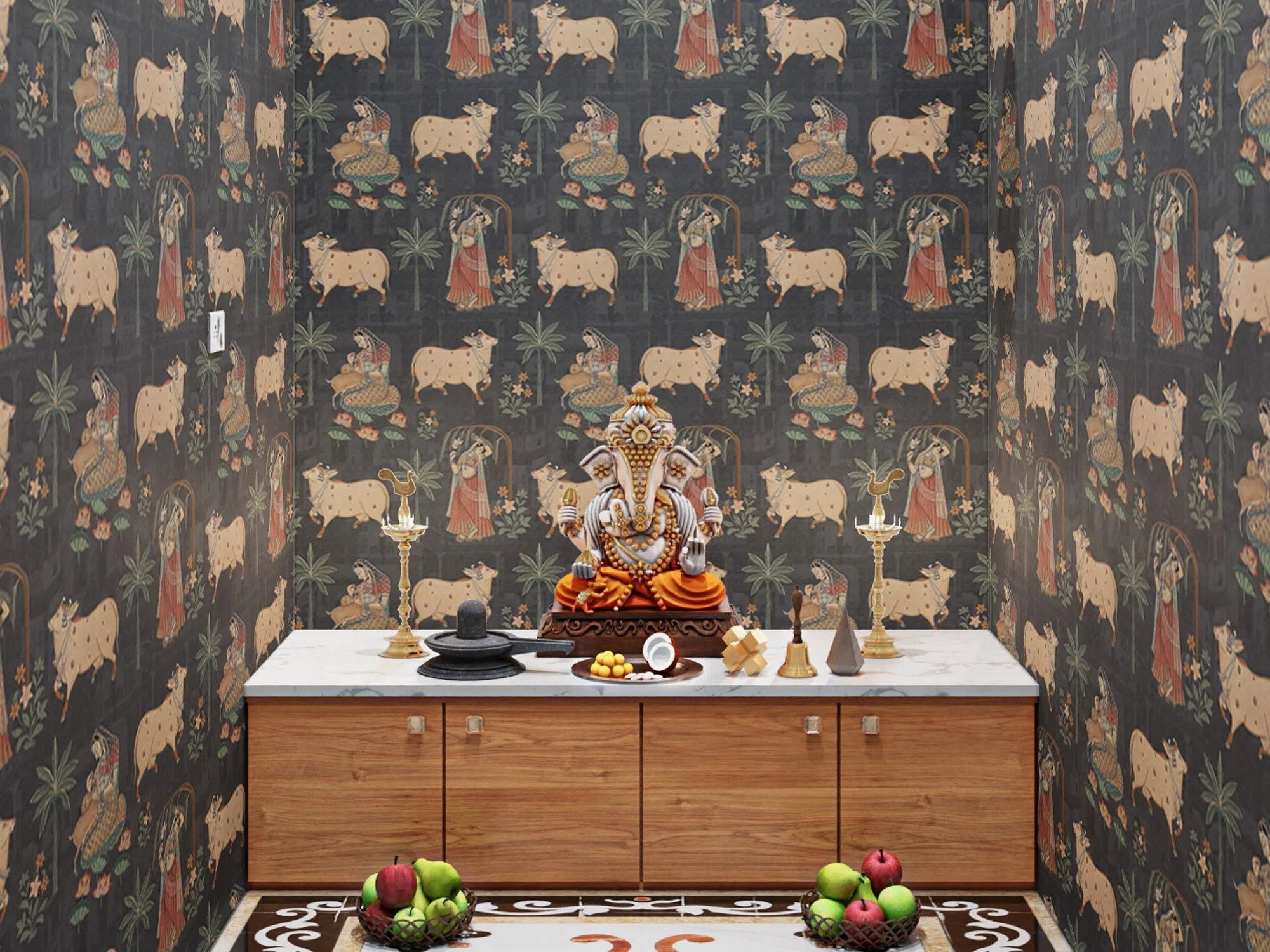
If you want the pooja room to feel truly traditional and premium, pichwai wallpaper is one of the most striking choices. Inspired by Nathdwara paintings, Pichwai art often features motifs like lotus ponds, cows, peacocks, temple elements, and devotional scenes.
Why pichwai wallpaper works so well
- It feels authentic and temple-like
- It adds depth and storytelling.
- It looks stunning with brass diyas, bells, and wooden mandirs.
- It creates a festival-ready backdrop—especially for Janmashtami, Diwali, and special pujas.
Styling tips for pichwai wallpaper
- Choose one feature wall behind the idol—don't cover all walls unless the room is large.
- Pair with warm lighting (2700K–3000K bulbs) for a soft glow.
- Use wood tones (teak, walnut, or natural finish) or white mandirs depending on wallpaper brightness.
- Keep accessories curated: a few brass pieces look better than many small items.
If your Pichwai design is very colourful, balance it with neutral flooring and simple curtains. Let the art be the hero.
Lotus Wallpaper: The Most Versatile Choice for Mandir Spaces
Lotus wallpaper is a classic for pooja rooms because the lotus symbolises purity, devotion, and spiritual growth. It looks equally beautiful in traditional and modern homes.
Where does lotus wallpaper look best
- Behind a white or light-wood mandir
- In a small pooja corner where you want softness, not heavy artwork
- In apartment mandirs where the pooja area shares space with living/dining rooms
Lotus wallpaper styling ideas
- Pair with marble texture accents (real or printed) for a clean mandir look.
- Add brass diya lighting to highlight lotus outlines.
- Choose a lotus pattern with gold detailing if you want a premium finish.
- Keep the platform simple—white marble top or light stone works best.
Lotus designs also photograph beautifully during festivals—great if you decorate with flowers, rangoli, and diyas.
Material Tips: What Wallpaper Finish Is Best for Pooja Areas?
Pooja rooms deal with oil lamps, incense, smoke, and occasional splashes from water. The best approach is choosing the right finish and caring for it properly.
Recommended finishes
- Wipeable vinyl or coated wallpaper: easier to clean and maintain
- Peel-and-stick (for renters): quick upgrades, easy removal
- Textured wallpaper (limited use): looks premium, but may trap dust—use on higher walls away from diya smoke
Simple maintenance rules
- Keep the diya a little away from the wallpaper or use a glass diya cover.
- Use a small exhaust or keep ventilation open if you burn incense daily.
- Wipe gently with a soft cloth (avoid harsh chemicals).
Quick Décor Checklist for a Balanced Pooja Room Look
No matter which wallpaper you choose, these details help complete the space:
- Warm lighting above or around the mandir
- One focal wall (avoid over-wallpapering in small rooms)
- Brass or copper accents for a traditional finish
- Storage for pooja items to keep the area tidy
- A clean colour palette (2–3 colours max)
Wallpaper should support devotion, not compete with it—so aim for calm, symmetry, and clarity.
Final Thoughts: Choose Wallpaper That Feels Sacred and Personal
The best pooja room wallpaper is the one that matches your family's spiritual style—whether that's heritage-rich pichwai wallpaper, subtle spiritual wallpaper, classic Indian wallpaper motifs, or peaceful lotus wallpaper. Focus on one strong wall, pair it with warm light and clean décor, and your mandir corner will feel truly intentional—every single day.
